
It’s never easy seeing a family member suffering through an illness. We want to find a way to support them, but we can also feel helpless. For Emile Maamary and Mark Elias, that helplessness — watching their grandmothers struggle with essential tremor — became the seed of Steadiwear, a novel medtech startup.
Turning helplessness into a solution
When Maamary and Elias met at university in 2014, they quickly learned of their shared family challenge and decided to turn that helplessness into a solution. The condition their grandmothers were up against is a common, often inherited neurological disorder that causes involuntary, rhythmic shaking, primarily in the hands and arms during movement.
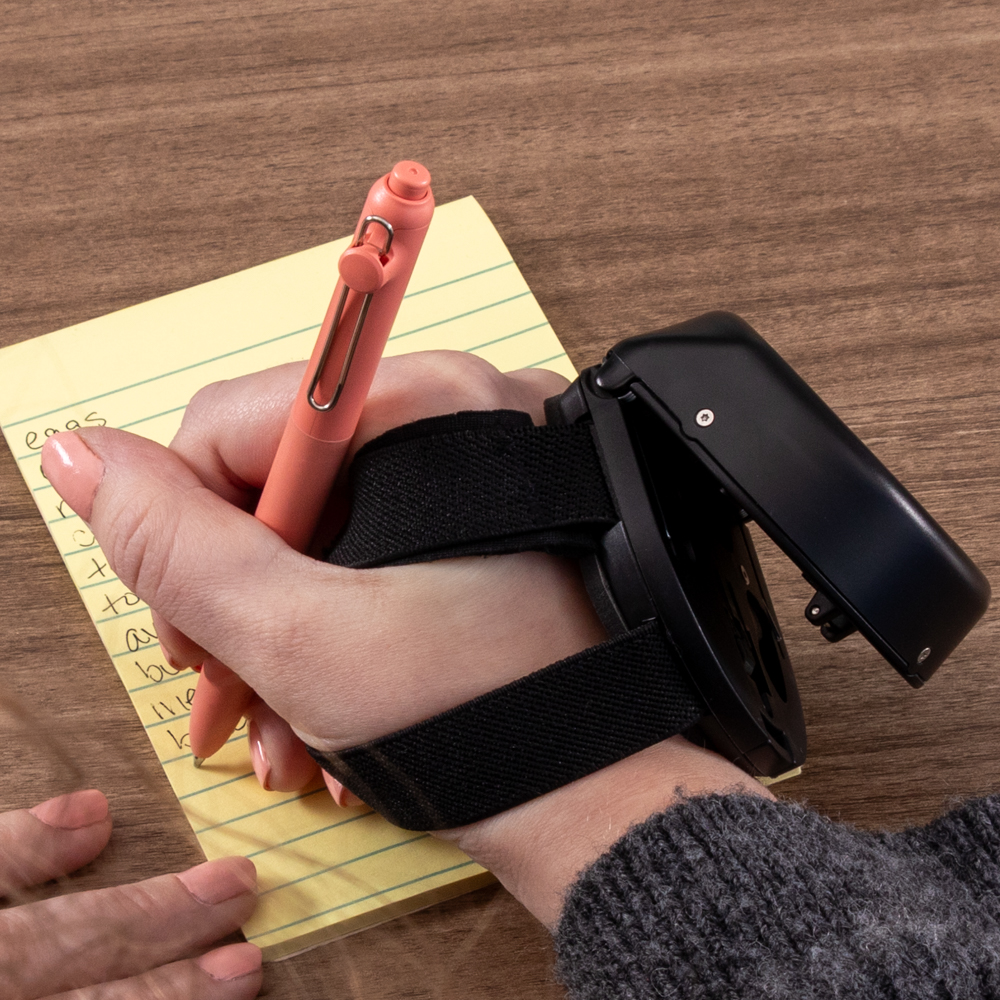
As they researched possible solutions, the co-founders quickly realized that the only available options were pharmaceutical or surgical. Drawing on what they’d seen with their grandmothers, they saw an opportunity to develop a wearable solution that could help people with essential tremors and Parkinson’s disease.
But it wasn’t only their grandmothers’ experience they drew inspiration from. In an unconventional move, they looked at how engineers design buildings to survive earthquakes. Elias is a structural engineer, and the two turned to a process called tuned mass damping to stabilize tremors.
“It’s tech that is typically used in high-rise buildings to prevent their collapse during an earthquake, so it was definitely an out-of-the-box solution to a problem that needed more solutions. Nobody had taken that approach before,” Maamary said.
From earthquakes to wearables
Maamary and Elias spent the first five years building the product’s first version and brought it to market, just as the pandemic began. It was an unexpected roadblock, but Maamary said the pause gave them a chance to look at what they had built and develop a smaller, lighter, and more effective version.
“The first version, Steadi-1, only reached a couple hundred people. Early adopters and beta testers. We published a study validating that it worked, went through the registration process with the FDA and Health Canada, and even got distributed in Australia,” he said.
Steadi-2, the product’s second iteration, was half the weight and size of its predecessor and sold almost 2,000 units. The device combined the existing technology with magnets for what they called magnetic tuned mass damping. That change caused a new problem—it no longer functioned effectively for people with from Parkinson’s disease.
Maamary and Elias took the lessons and revenue from the second version and went back to the drawing board. Along the way, the positive feedback from patients and their research helped them raise a $1million CAD pre-seed round.
“We were able to develop Steadi-3, the version currently on the market. It’s the smallest, lightest, and most effective device we have to date. It works for both essential tremor and Parkinson’s disease. Our clinical studies showed five out of six people benefited, but in the real world it’s actually seven out of ten. The discrepancy comes from sample sizes. Studies use smaller samples. The real world shows the actual effects,” Maamary said.
The Steadi-3 has sold over 5,000 units to date and Steadiwear has signed distribution partners in multiple countries.
Scaling with the Accelerator Centre
Steadiwear first connected with the Accelerator Centre as part of the AC:Incubate program before being selected for the AC:Studio program. Maamary said the company has benefited from the mentorship and funding from the programs.
“The funding came at a fantastic time. The first batch helped us manufacture units of the Steadi-3 that’s currently on the market. The second round is helping us with product registrations in new markets and expanding our research and development for the next iteration. It also helped us grow the team. We hired two more interns this summer, both from the University of Waterloo,” Maamary said.
The Steadiwear team is working on the first prototypes of Steadi-4 while pursuing registrations in the European Union and looking at markets in Asia and South America. The company also closed a $2.2 million CAD seed round in the fall of 2025.
“We’re very happy that the company is growing and that we’re able to stick to our mission: providing affordable wearable devices that reduce hand tremor for people with essential tremor and Parkinson’s, and improve their quality of life and independence,” Maamary said.
In addition to the next iteration of the product, Steadiwear is working on a quality-of-life study to be published in a tremor journal later this year.
“We have patients who can apply makeup for the first time in 30 years. We have patients who’ve reduced their hours with caregivers because they can feed themselves. We have one gentleman who uses the device to shave his own beard, and a woman who’s playing the clarinet again. People are able to go back to the hobbies they love, which improves their quality of life and confidence. These are the kinds of stories that keep us driven to continue innovating,” Maamary said.

