Most of us learn to game a system before we even know what a system is. Ask your parents to stay out until midnight, and they’ll probably agree to 11, which is what you wanted to be all along. It’s a harmless enough trick as a teenager. But that same instinct follows us into boardrooms and budget meetings, and there the stakes are a lot higher.
In organizations, that same instinct can show up in budget requests. Ask for $20 million knowing you will get $10 million. Pitch four ice pads knowing you will get approval for two. Sean Geobey has spent years thinking about what that kind of strategic gaming costs us collectively, and what we could do instead.
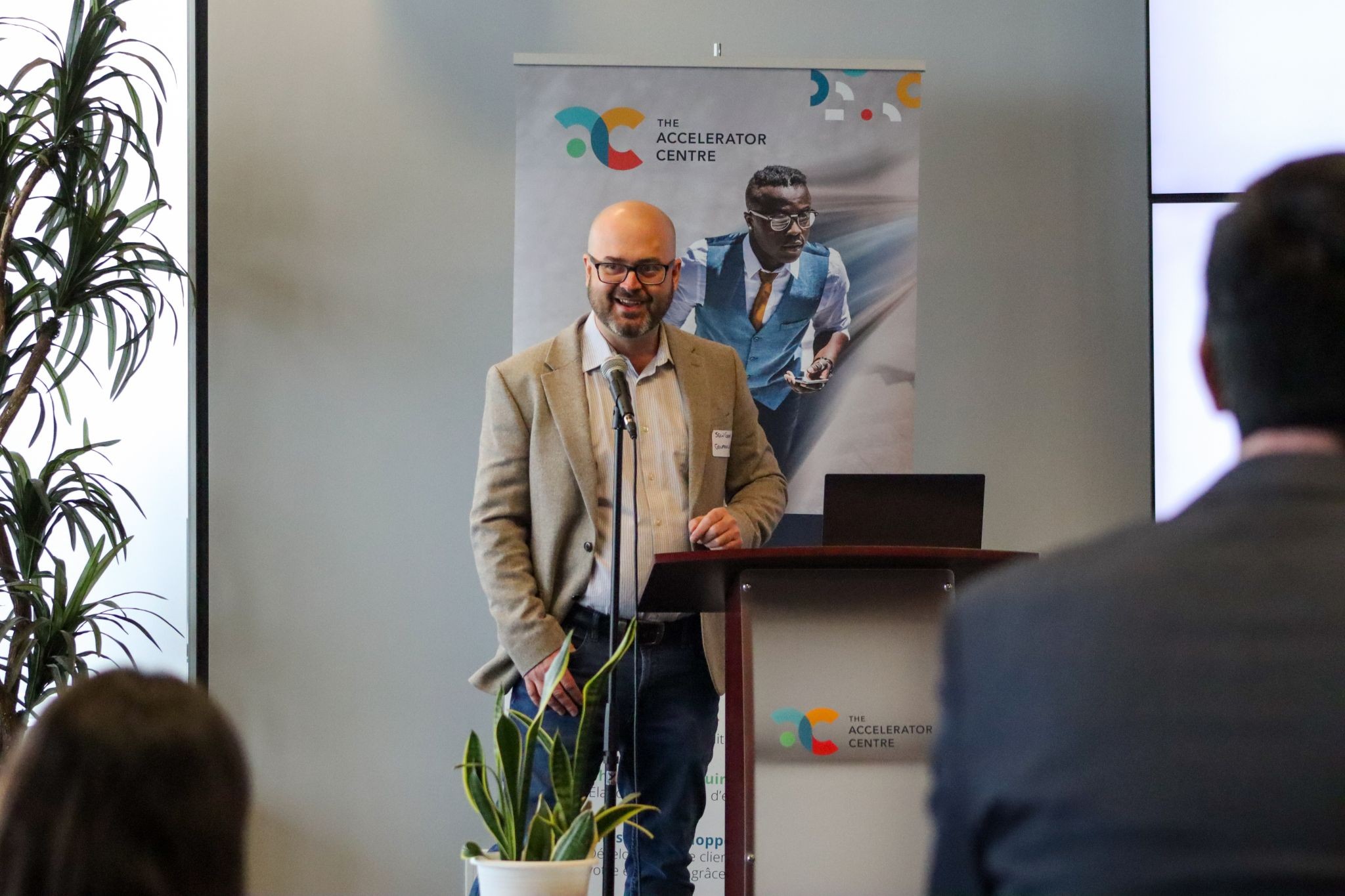
Geobey is a professor at the University of Waterloo with over a decade of experience teaching social entrepreneurship, social finance, and community economic development. In 2025, he co-founded Groupthink Labs with PhD candidate Gryphon Loubier to develop solutions that make group decisions transparent, fair, and efficient when resources are limited.
Fixing the way organizations make decisions
Most medium to large size organizations have processes to help guide decision making. For Geobey, the problem is not the process, it is human nature.
“People are human. They are going to try to game those processes. It happens all the time,” he said.
Geobey pointed out that hoarding information often causes organizations to miss opportunities to work better, innovation, and collaborate.
Throughout his career researching and writing about social enterprise, community change, and social innovation, Geobey saw that given limited time and resources, organizations struggle to make collective decisions that enable their people to take that action together. The idea for Groupthink Labs evolved out of those observations, specifically his work with the City of Kitchener in 2018 where he designed a voting system for a participatory budget.
“We had residents in two communities propose ideas for parks in their neighbourhood and then vote on them. Those parks today are what was chosen. It was a really different way of making city planning decisions,” he said.
What came out of that project was that many of the problems that go into setting priorities and having people’s voices heard are problems in almost any organization. Geobey said that includes governments, nonprofits, and private companies. When he started his sabbatical last year, Geobey and Loubier decided to take what they learned from that experiment and build a platform to see if they could help more organizations make collective decisions in a better way.
A platform that makes honesty the winning move
Groupthink Labs’ Polls platform plugs into an organization’s existing systems and changes the underlying incentives. The math on the back end is designed so that being honest about what you actually need is a better strategy than inflating your ask.
Instead of hoarding information to protect your budget, you’re rewarded for sharing it. The result, according to Geobey, is decisions that are transparent, fair, and efficient.
“By changing the nature of the incentives underpinning it, the culture on top of it will change, too,” he said.
Groupthink Labs Labs spent last year embedded working with the Region of Waterloo on its Plan to End Chronic Homelessness. They are working with over 40 frontline organizations and 150 participants serving unhoused people locally, including about one-quarter of voters being those who had lived experience of being unhoused.
Each month, a pool of roughly $60,000 was up for allocation. What started as a competitive scramble gradually became something different. Organizations stopped pitching themselves and started pitching how their work would make everyone else’s work better. The people actually using those services had a vote too, and they used it to reward the organizations that treated them with respect.
“The conversation changed from ‘support my program’ into ‘my organization is well placed to do work that is going to make your work easier’. Even better, about a quarter of the people voting in each round were people who were using those services and were able to interact in a very direct way,” he said.
Over the course of the year 33 projects had been funded using Groupthink’s tools for a total of $525,000.
On the enterprise side, the use cases are just as compelling. Universities can use it to align research funding priorities before development officers ever walk into a donor meeting. Companies can use it to cut through the politics of capital allocation across divisions. Anywhere there’s a budget, a committee, and a room full of people with competing interests, there’s a problem Groupthink Labs was built to solve.
Experts need a sounding board
Even with a decade of teaching social entrepreneurship and knowing the ecosystem inside and out, Geobey jumped at the chance to join the Accelerator Centre’s Global Impact Creator program.
“As much as I teach a lot of these things about entrepreneurship, it’s useful to have independent eyes on things. Sometimes I just need to talk this over with someone who doesn’t have the same entanglements with my business that I do,” he said.
Through the AC’s Global Impact Creator program, Geobey found something beyond mentorship and funding. He found peers. People who were navigating the same tension between mission and viability, and who brought the same level of rigour to the problem.
While still in its early stage, Groupthink Labs is pushing toward growth. On the product side, Geobey is thinking about how Polls integrates more deeply into existing enterprise systems, complementing the decision-making tools organizations already use rather than asking them to replace anything.
On the client side, he is actively looking for new customers while building partnerships with management consultants and organizational change specialists.
The logic is straightforward. A platform that rewires how people make decisions together is a powerful tool, but dropping it into an organization without the human support to go with it misses the point. The consultants who spend hours inside those cultures, navigating the hierarchies and the history, are the ones best placed to bring it in and make it stick. Groupthink Labs wants to be the tool they reach for first.
“I love having more of my time to go deeper with the tools, so that every quarter, every month, we’re coming up with more stuff that’s going to let you be better at doing the things you’re doing,” Geobey said.